
Injury Insights: Research (March 2026)
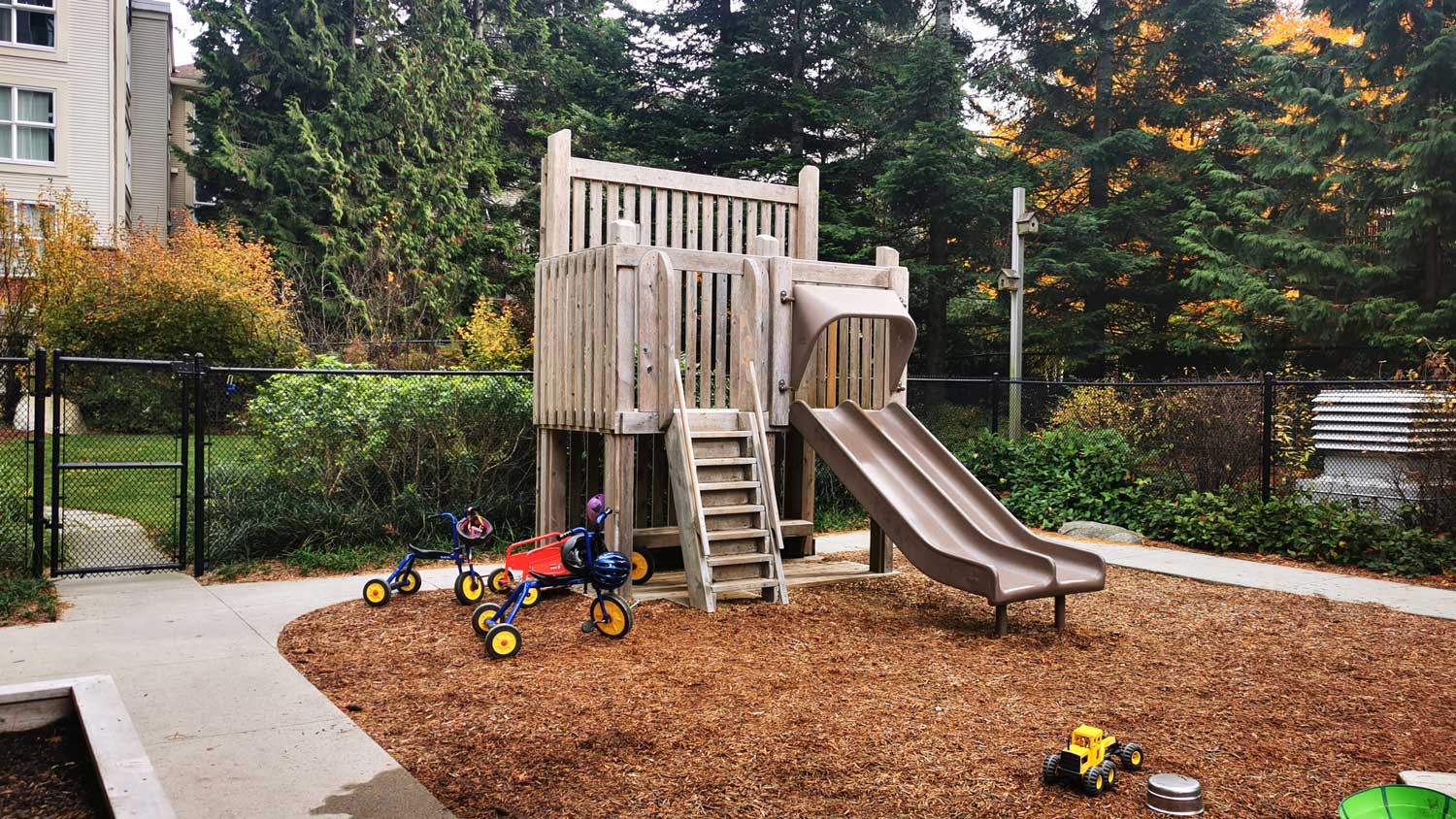
[Cover photo: Outdoor play space at one of the studied early learning and child care centres, by Ramsden et al.]
Our Injury Insights: Research series highlights a selection of recent publications by BCIRPU researchers.
Trends in hospitalizations resulting from violent injuries among children and youth in British Columbia during the COVID-19 pandemic (March 2026)
Authors: Alex Zheng, Alexia Medeiros, Sarah A. Richmond, Fahra Rajabali, Shazya Karmali, Brendan Smith, Sarah Carsley, Alison K. Macpherson, Natasha Saunders, Shelina Babul, and Ian Pike
During the COVID-19 pandemic, stay-at-home measures were put in place to minimize the spread of the virus. Researchers hypothesized that heightened levels of stress and anxiety during this time led to an increase of violence-related hospitalizations for youth in BC. Violence-related injury hospitalizations were studied between April 2015 and March 2022. Researchers found that prior to the pandemic, there was a decrease in violence-related hospitalizations; however, during the pandemic, there was seemingly no correlated impact on violence-related hospitalizations for children and youth aged 0-19.
Researchers also compared the difference in the impact of COVID-19 restrictions in British Columbia and Ontario. During the pandemic, Ontario experienced an immediate 29% reduction in hospitalizations, followed by a return to pre-pandemic levels by 2022. The immediate reduction seen in Ontario was attributed to a general public avoidance of hospitals due to fears of the COVID-19 virus as opposed to a true reduction in violence-related injuries. This difference in avoidance behaviour was hypothesized to be due to pandemic policies being enacted on the whole province of British Columbia, compared with the more regional applications in Ontario.
This study shed light on the importance of improving data collection and surveillance to better inform safety messages and policies.
Read more in the journal Child Protection and Practice.
Immigrant mothers’ experiences with child soothing in Vancouver, Canada: "I just want to be a good mom" (December 2025)
Authors: Michelle E.E. Bauer, Aygun Ibrahimova, Fahra Rajabali, and Karen Sadler
Soothing a crying baby can be overwhelming and frustrating for any parent. For parents who are new to Canada, these feelings can be even greater. Many immigrant mothers experience feelings of isolation, guilt, and difficulty navigating motherhood while adjusting to a new place and navigating cultural differences. Researchers at Prevent Shaken Baby Syndrome BC and the BCIRPU spoke with 23 immigrant mothers of young children aged 0-5 years to better understand the feelings and cultural pressures they experience upon coming to Canada.
Through focus groups conducted at family gathering spaces, mothers connected with one another and were provided a space to explore normal negative feelings, additional factors that can exasperate these feelings, and strategies for coping. Findings suggest that there is a need to include the lived experience of newcomer and immigrant parents in soothing and parenting resources given to families. Additionally, accessible family centres can ease the burden on mothers by providing opportunities for connection and community.
Read more in the journal Child: Care, Health, and Development.
Children’s outdoor play at early learning and childcare centres: Examining the impact of environmental play features on children’s play behaviours (December 2025)
Authors: Rachel Ramsden, Ian Pike, Sally Thorne, and Mariana Brussoni
Early learning and child care (ELCC) centres can support outdoor play and children’s relationships with the natural world. This study explored how outdoor play features in ELCC spaces shape how children move, interact, and play.
Researchers observed how children moved and interacted on and around play structures that are commonly found in ELCC outdoor spaces. The eight ELCC centres studied all had similar outdoor play elements and features, such as climbing structures, gardening areas, sandboxes, and tricycle paths. Researchers found that each play feature encouraged different forms of play behaviour, such as physical play, exploratory play, imaginative play, and play with rules. Most play features supported more variety in outdoor play, compared to open areas, with open areas relying on the presence of loose parts and movable equipment to facilitate outdoor play. Understanding how children play with different features of their outdoor environment can help planners and educators facilitate diversity in play at ELCC centres.
Read more in the journal PLOS One.
Occupational injury among firefighters in Canada: a trends analysis of fatality and time-loss injury claims (2007-2021) (December 2025)
Authors: Samar Al-Hajj, Larry Thomas, Len Garis, Khalil El-Asmar, Farah El-Hajj, and Ian Pike
Firefighters in Canada experience the highest rate of occupational injury and death, in addition to the health burden they experience from smoke inhalation, physical and chemical hazards, and trauma experienced throughout their careers. Researchers analyzed time-loss claims and injury- and fatality-related claims over a period of 15 years in order to learn how society can better support firefighters.
This study suggests that despite training and safety precautions, firefighters still have a high risk of injury from fire and physical hazards, in addition to the long-term effects of smoke inhalation and psychological effects due to the nature of the work. Having a long career as a firefighter is associated with an increased incidence and mortality rate of cancer.
Researchers call for further research to better understand and support the mental and physical health of firefighters.
Ready more in the journal Injury Epidemiology.
Geospatial hotspots and neighbourhood deprivation associated with unintentional home injuries in British Columbia, Canada (January 2026)
Authors: Umerdad Khudadad, Tomoko McGaughey, Alex Zheng, Audrey R. Giles and Ian Pike
Socioeconomic conditions, such as the neighbourhood one lives in, income level, access to resources, and housing conditions, can contribute to one’s risk of injury. In this study, researchers used mapping tools and Census data to find “hotspots,” or areas in British Columbia where unintentional home injuries leading to hospital visits were happening more often.
It was found that home injury hotspots were clustered in the Lower Mainland region of BC. Injury rates were higher in neighbourhoods where more people didn’t have formal education, where household incomes were lower, and where more residents lived in low‑rise apartment buildings.
This study suggests that policies addressing contributing factors can help reduce unintentional home injuries. Public health initiatives should take geospatial and sociodemographic data into account in order to support communities and improve health equity.
Read more in the journal Scientific Reports.
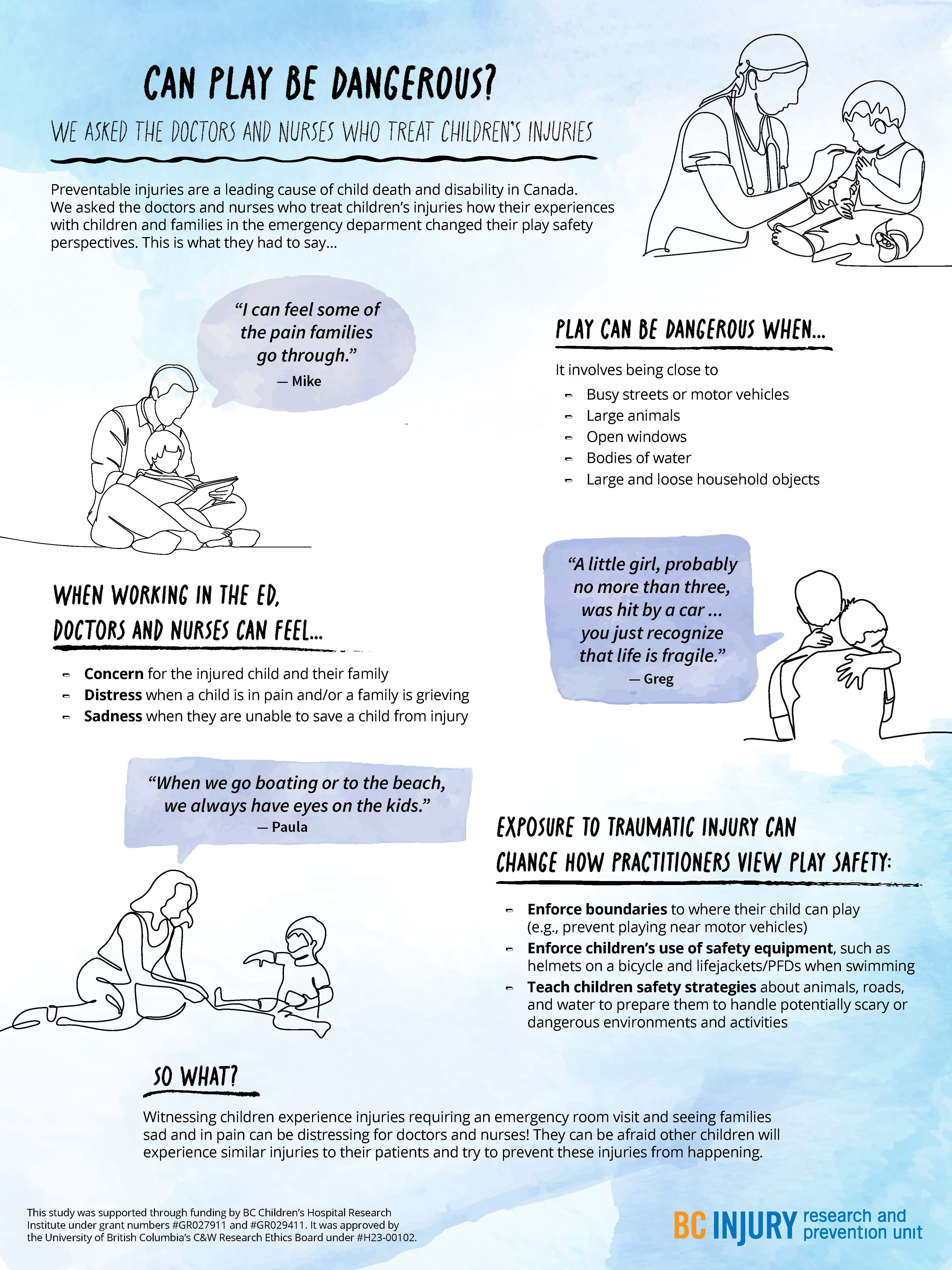
- distress when a child was in pain and when a family was grieving; and
- sadness in the event they were not able to save a child in their care.
- concern for the injured child and the child’s family;
Particularly traumatic events, such as those involving vivid sights and sounds (e.g., families holding each other and having extreme reactions), stuck with the practitioners, having long-lasting impressions on them and causing them to re-live these events in the years following their exposure.
Even after their shift was over, practitioners said that they changed how they approached parenting and how they perceived safety during play as a result of witnessing these traumatic events. They reported having more knowledge of the causes and consequences of severe injuries, such as those that require hospitalization or emergency care. For example, practitioners were more likely to enforce boundaries around where their children could play, such as by forbidding their child to play near busy streets. They also were more likely to tell their child about safe play environments and equipment, and put this equipment on their child before play, such as explaining the benefits of using helmets while riding bikes.
Practitioners were more likely to enforce boundaries around where their children could play, and use safety equipment, such as bike helmets.
Practitioners also described being concerned about their children’s play near open windows, around large bodies of water unsupervised, and in environments where firearms were present. They also expressed worry about their children’s play on trampolines and on motorized vehicles, such as ATVs. Findings related to trampoline play safety concerns were published in the journal Injury Prevention.
Observing family grief due to child injury or death affected the mental well-being of health care practitioners, drawing attention to the need for mental health supports for those involved in caring for severely injured and dying patients.
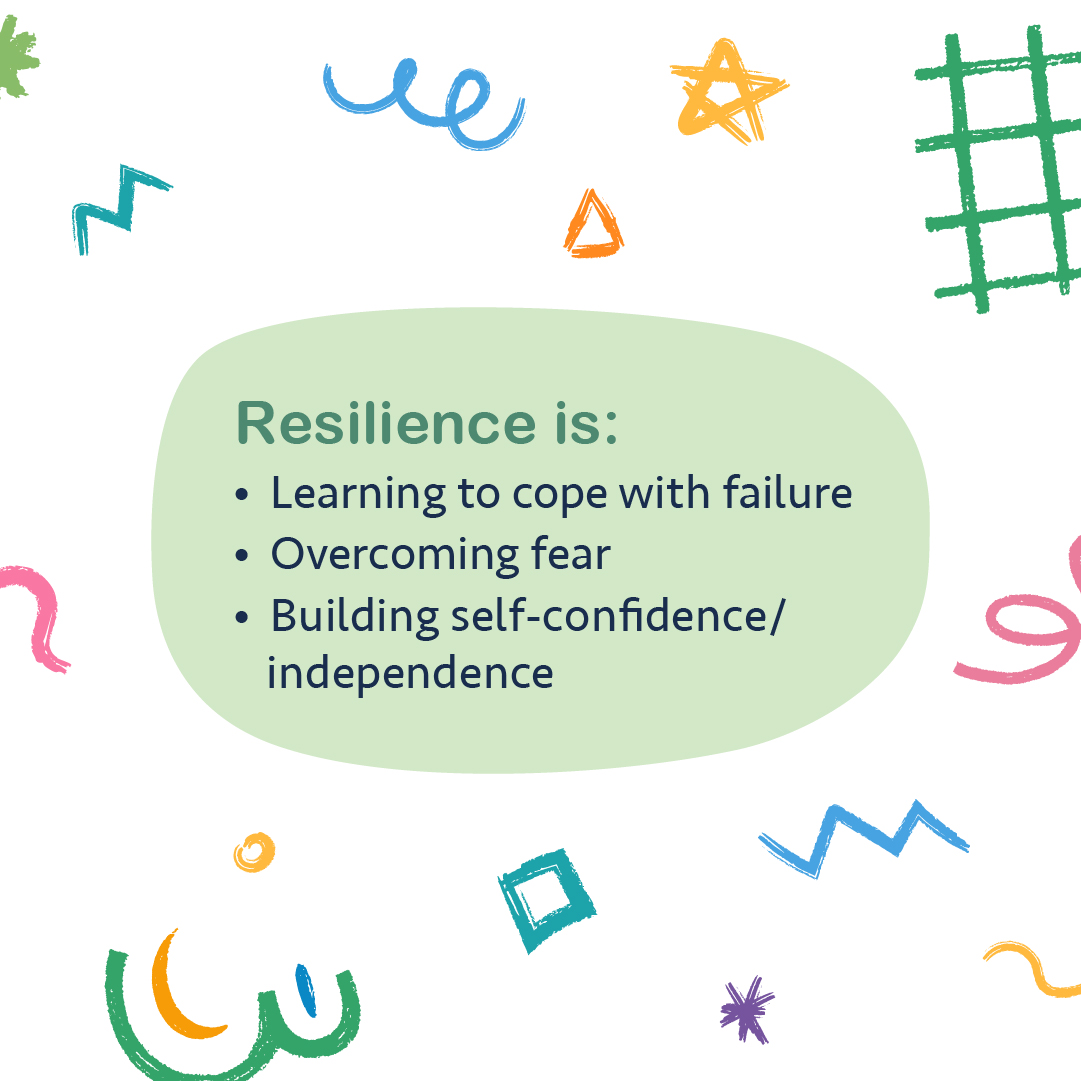

"Raise more resilient children through play...watch and see how your child handles challenging tasks without intervening right away." —Dr. Michelle Bauer
Building resilience through play
How can parents help their children build resilience? By letting them play!
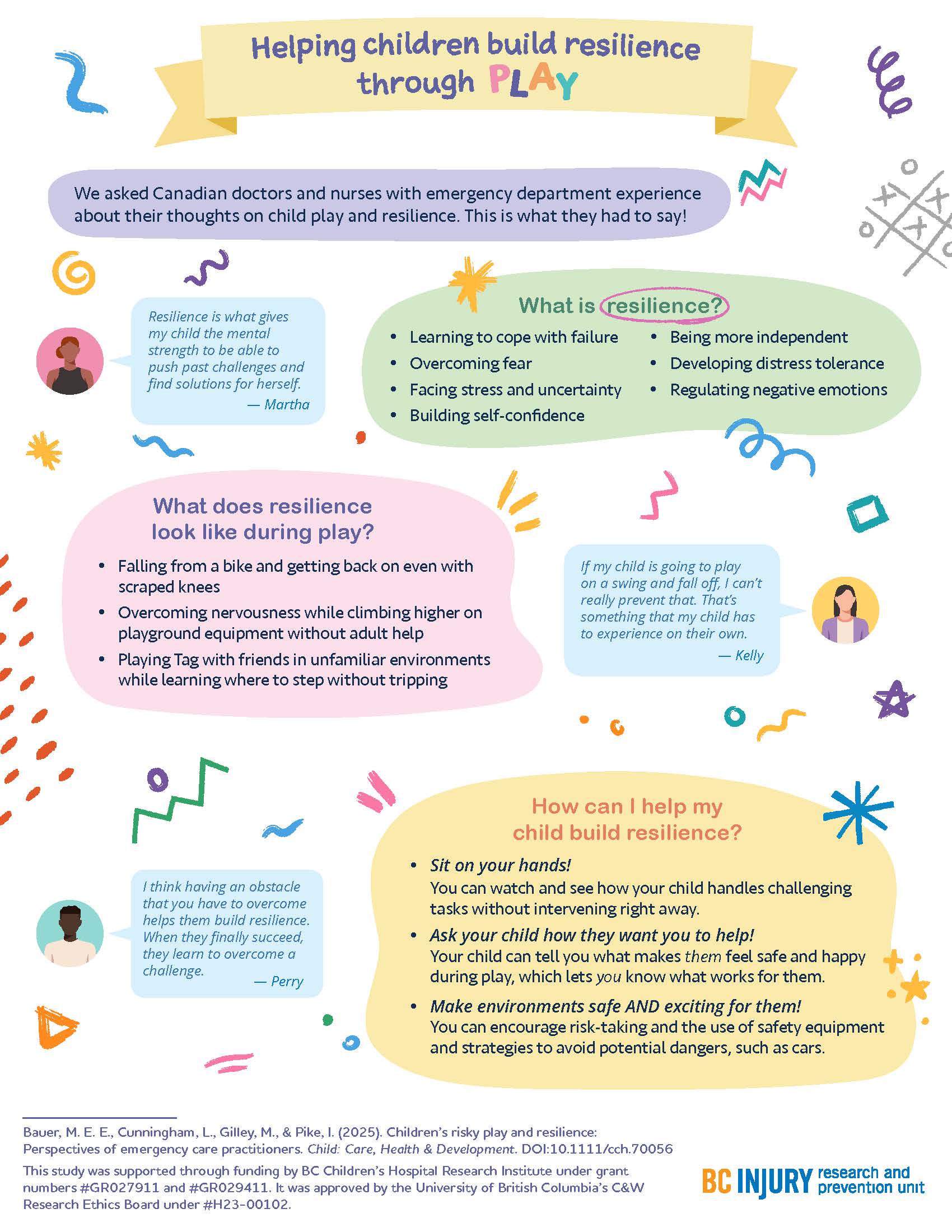
The experiences that practitioners witnessed encouraged them to support their children in building resilience through play; specifically, by supporting children in learning to cope with failure, overcome fear, build self-confidence, develop distress tolerance, and regulate negative emotions. Findings related to building resilience through play were published in the journal Child: Care, Health, and Development.
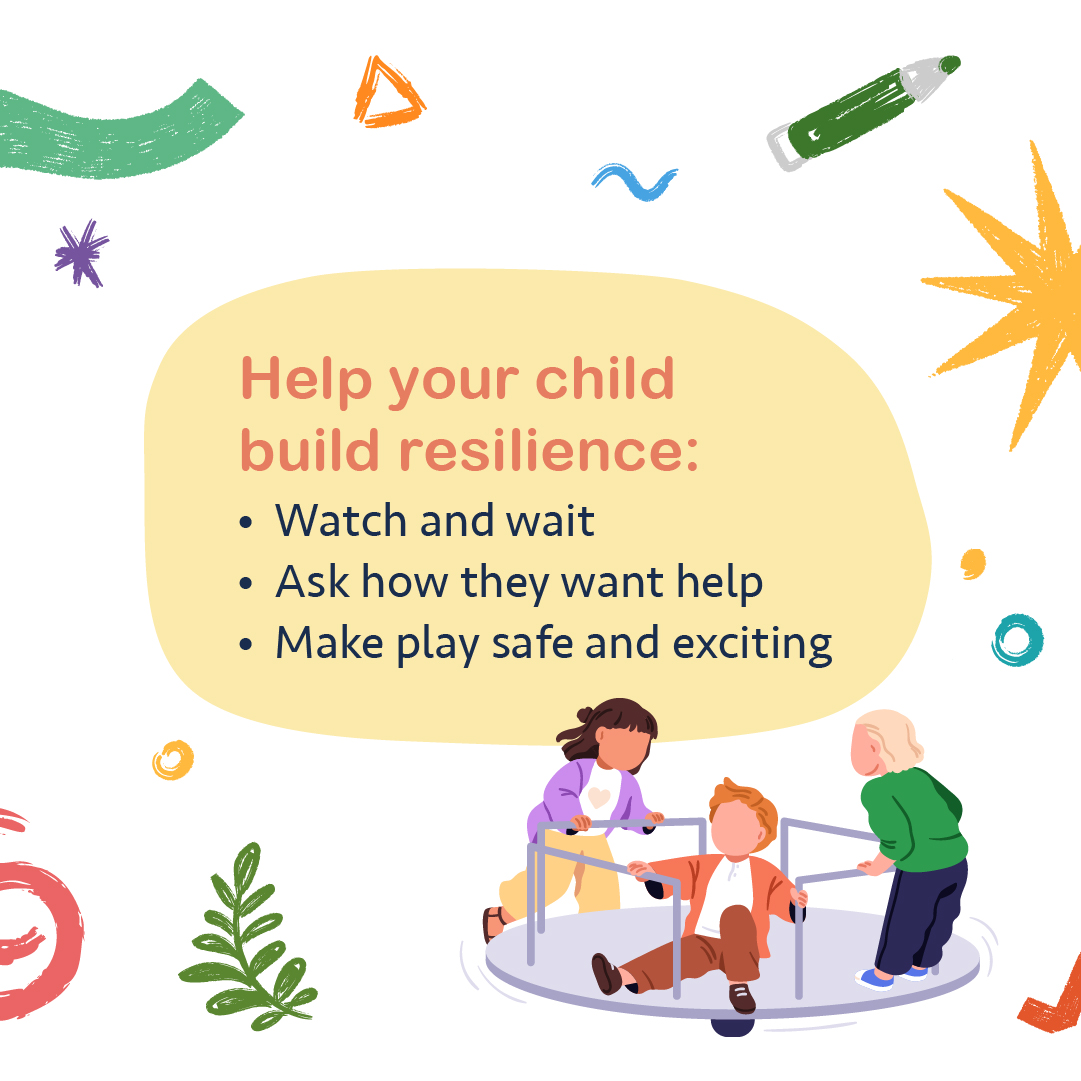
Parents fostered resilience in their kids by:
- helping their kids get back on bikes after they fell off and wanted to try again;
- sitting on their hands so they did not instinctively reach for their children when their children fell down; and
- encouraging participation in challenging and thrilling activities in forests and water while safety equipment was used.
"There are a few ways that parents can raise more resilient children through play that are supported by literature and our study findings," said Dr. Bauer. "One: watch and see how your child handles challenging tasks without intervening right away."
"Two: Ask your child how they want you to help—let them tell you what makes them feel safe and happy during play. Let them lead. And three: make play both safe and exciting by encouraging risk-taking, teaching them how to avoid hazards, and using safety equipment.”
This research was supported through Drs. Bauer’s and Gilley’s receipt of a clinical and translational research seed grant from the BC Children’s Hospital Research Institute (BCCHR), Dr. Bauer’s BCCHR postdoctoral fellowship award, and additional training provided to Dr. Bauer through her participation in the Programs and Institutions Looking to Launch Academic Researchers (PILLAR) program through ENRICH, a national organization training perinatal and child health researchers.
Learn more about the study through two infographic posters:
Graphics and posters by Milica Radosavljevic


