
Reducing concussions in the film and television industry

[Cover photo: HeadSmart workshop presenters and organizers in LA. Photographs courtesy of SAG-AFTRA]
When you watch a TV show or movie, every fall, car crash, and jump is performed by a stunt person who is putting themselves at risk for a concussion or serious brain injury.
In May, BCIRPU Director Dr. Shelina Babul was invited by SAG-AFTRA, the largest labour union in the film and television industry, to Los Angeles to speak about how to reduce concussion risks on the job.
The event, called Headsmart: Concussion Awareness for Stunt Professionals, was led by Dr. Babul and Jim Vickers, a long-time SAG-AFTRA actor and stunt coordinator. The workshop combined personal experiences with information on the science of concussions, how to reduce the risk of brain injury, and practical tips for treatment, management, and recovery.
“I have never hosted a workshop that had so much emotional investment and gratitude,” said Dr. Babul. “Everyone in that room was fully engaging in the issue of concussions in the film and TV industry.”
Dr. Babul is the creator of the Concussion Awareness Training Tool (CATT), a globally-recognized online resource providing eLearning modules on the recognition, diagnosis, and management of concussions. Previously, Dr. Babul worked with UBCP/ACTRA (Alliance of Canadian Cinema, Television and Radio Artists) and Actsafe Safety Assocation to improve concussion education in the film and live performance industry in British Columbia. She created two resources specifically for individuals working in this industry: A concussion response pathway and an information resource package.
The Headsmart workshop ran two hours over time, and feedback from participants was that it was educational, and fun, and that those in attendance felt seen and heard.
“I have been in this industry for decades and no one has ever talked about this openly,” commented a participant in the workshop. “To be in a room where it was finally safe to be honest about what we go through meant everything. I left feeling seen and motivated be a part of the culture change.”
Concussions and head impacts in the TV and film industry are often not recognized or managed properly, as performers stick to rigorous filming schedules. A 2022 survey found that 80% of stunt performers reported having at least one head impact/head whip during their stunt career. More alarmingly, 65% said that they continued working, even after experiencing concussion-like symptoms.
“SAG-AFTRA is proud to have partnered with Dr. Babul to bring this vital concussion awareness workshop to our stunt community,” said a spokesperson on behalf of SAG-AFTRA. “In an industry where performers often face high physical risks, prioritizing brain health and establishing clear pathways for recognition and treatment is essential. We are encouraged by the overwhelming response from our members and remain committed to ensuring they have the resources and protections necessary to stay safe on the job.”
“For too long, our community has treated head injuries as just part of the job. HeadSmart changed that,” said Marie Fink, stunt performer and workshop co-organizer. “To see stunt professionals open up, ask questions, and finally feel safe having this conversation was a turning point. This is exactly the kind of advocacy our members deserve, and we are just getting started.”
“In order to better support stunt performers’ health and wellness, we have to start with recognition,” Dr. Babul said. “I hope that the Headsmart workshop is just the beginning of a larger movement towards better brain health.”
- distress when a child was in pain and when a family was grieving; and
- sadness in the event they were not able to save a child in their care.
- concern for the injured child and the child’s family;
Particularly traumatic events, such as those involving vivid sights and sounds (e.g., families holding each other and having extreme reactions), stuck with the practitioners, having long-lasting impressions on them and causing them to re-live these events in the years following their exposure.
Even after their shift was over, practitioners said that they changed how they approached parenting and how they perceived safety during play as a result of witnessing these traumatic events. They reported having more knowledge of the causes and consequences of severe injuries, such as those that require hospitalization or emergency care. For example, practitioners were more likely to enforce boundaries around where their children could play, such as by forbidding their child to play near busy streets. They also were more likely to tell their child about safe play environments and equipment, and put this equipment on their child before play, such as explaining the benefits of using helmets while riding bikes.
Practitioners were more likely to enforce boundaries around where their children could play, and use safety equipment, such as bike helmets.
Practitioners also described being concerned about their children’s play near open windows, around large bodies of water unsupervised, and in environments where firearms were present. They also expressed worry about their children’s play on trampolines and on motorized vehicles, such as ATVs. Findings related to trampoline play safety concerns were published in the journal Injury Prevention.
Observing family grief due to child injury or death affected the mental well-being of health care practitioners, drawing attention to the need for mental health supports for those involved in caring for severely injured and dying patients.
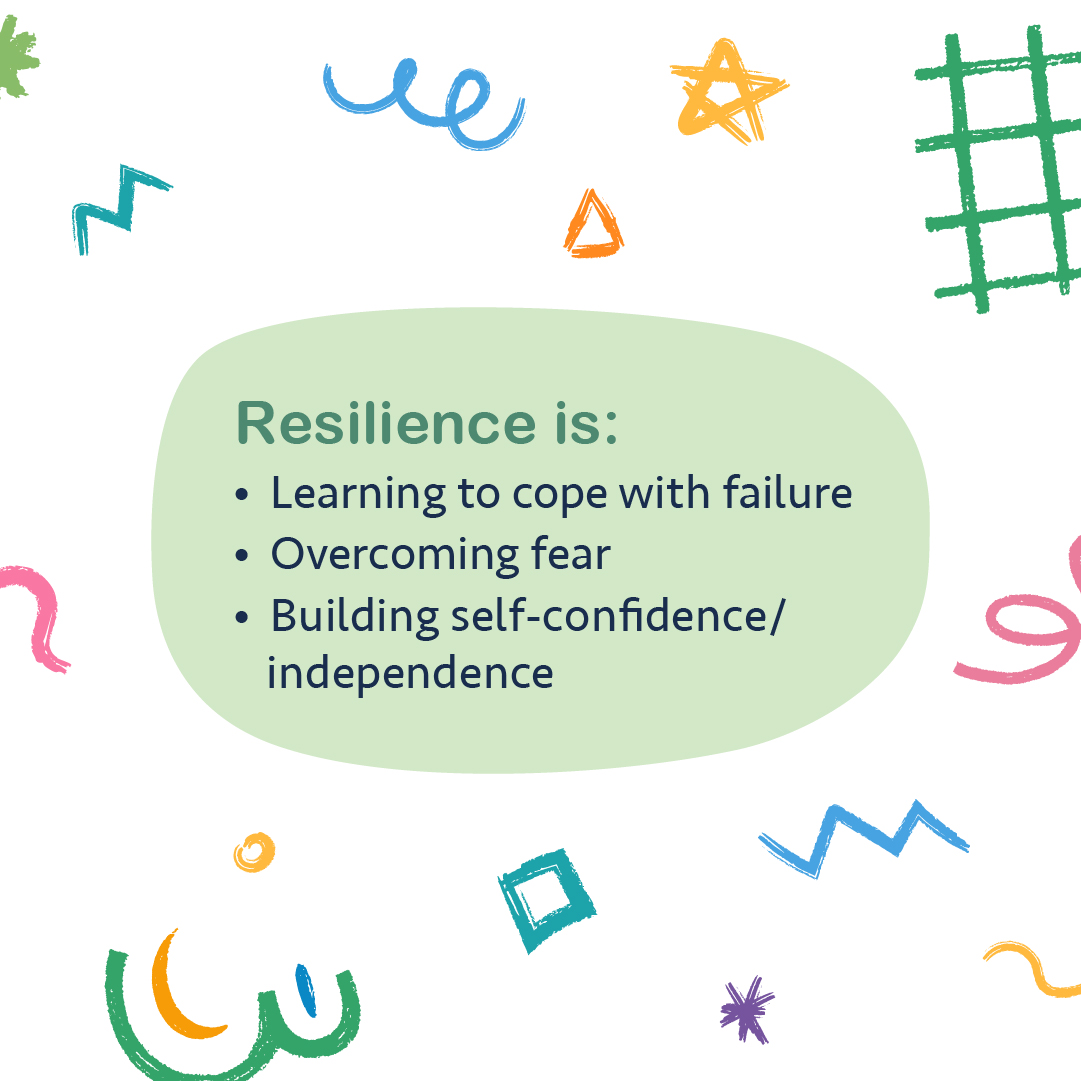

"Raise more resilient children through play...watch and see how your child handles challenging tasks without intervening right away." —Dr. Michelle Bauer
Building resilience through play
How can parents help their children build resilience? By letting them play!
The experiences that practitioners witnessed encouraged them to support their children in building resilience through play; specifically, by supporting children in learning to cope with failure, overcome fear, build self-confidence, develop distress tolerance, and regulate negative emotions. Findings related to building resilience through play were published in the journal Child: Care, Health, and Development.
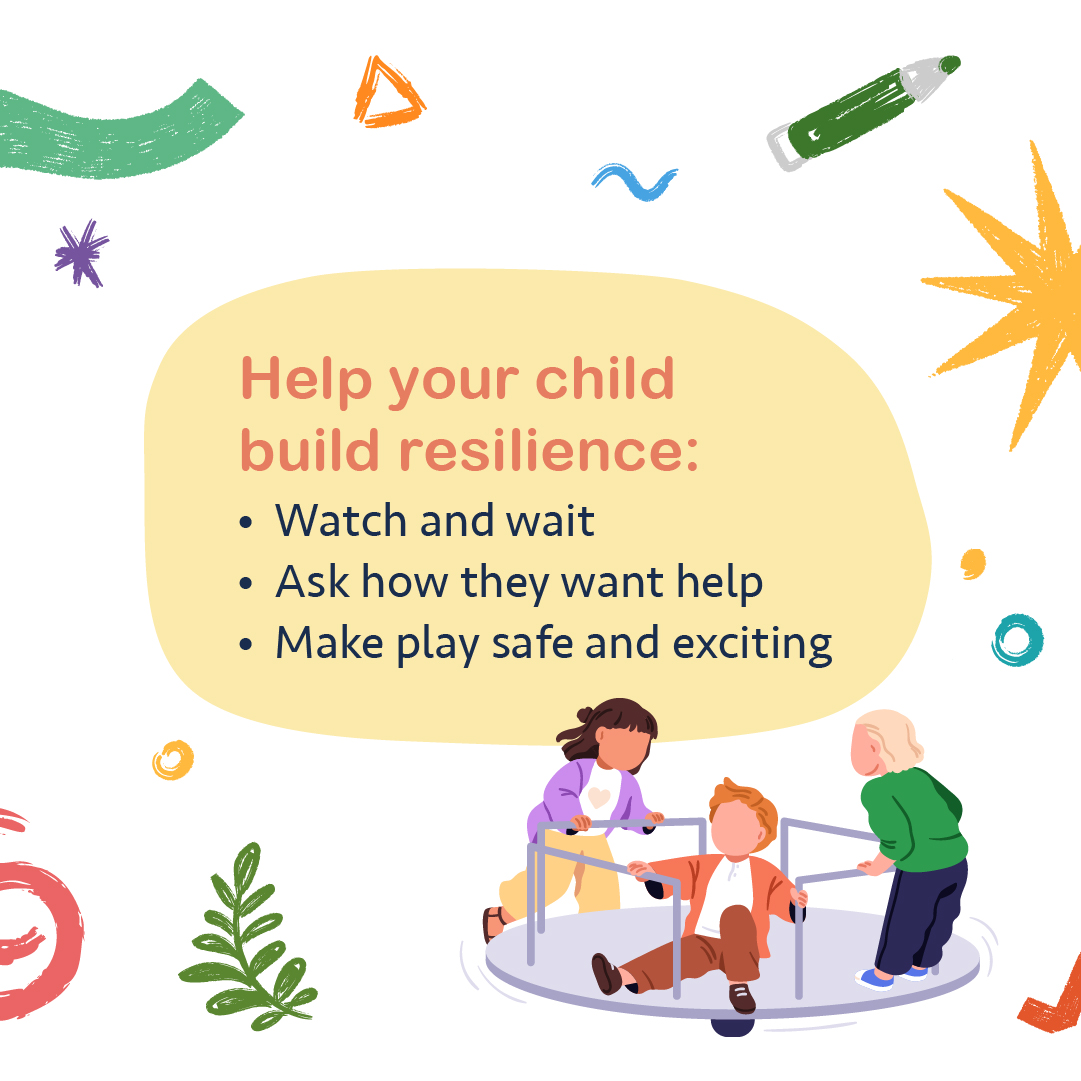
Parents fostered resilience in their kids by:
- helping their kids get back on bikes after they fell off and wanted to try again;
- sitting on their hands so they did not instinctively reach for their children when their children fell down; and
- encouraging participation in challenging and thrilling activities in forests and water while safety equipment was used.
"There are a few ways that parents can raise more resilient children through play that are supported by literature and our study findings," said Dr. Bauer. "One: watch and see how your child handles challenging tasks without intervening right away."
"Two: Ask your child how they want you to help—let them tell you what makes them feel safe and happy during play. Let them lead. And three: make play both safe and exciting by encouraging risk-taking, teaching them how to avoid hazards, and using safety equipment.”
This research was supported through Drs. Bauer’s and Gilley’s receipt of a clinical and translational research seed grant from the BC Children’s Hospital Research Institute (BCCHR), Dr. Bauer’s BCCHR postdoctoral fellowship award, and additional training provided to Dr. Bauer through her participation in the Programs and Institutions Looking to Launch Academic Researchers (PILLAR) program through ENRICH, a national organization training perinatal and child health researchers.
Learn more about the study through two infographic posters:
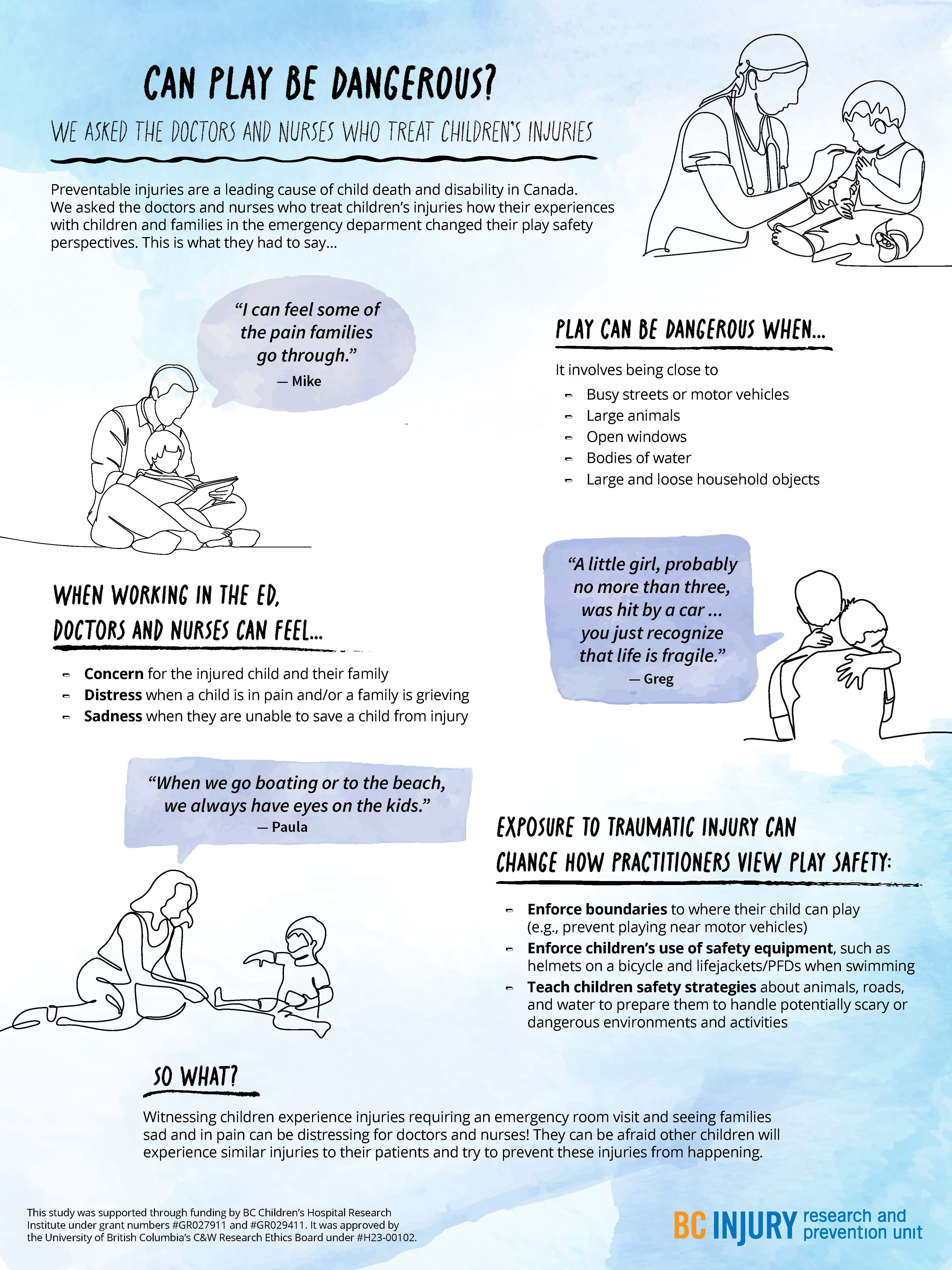
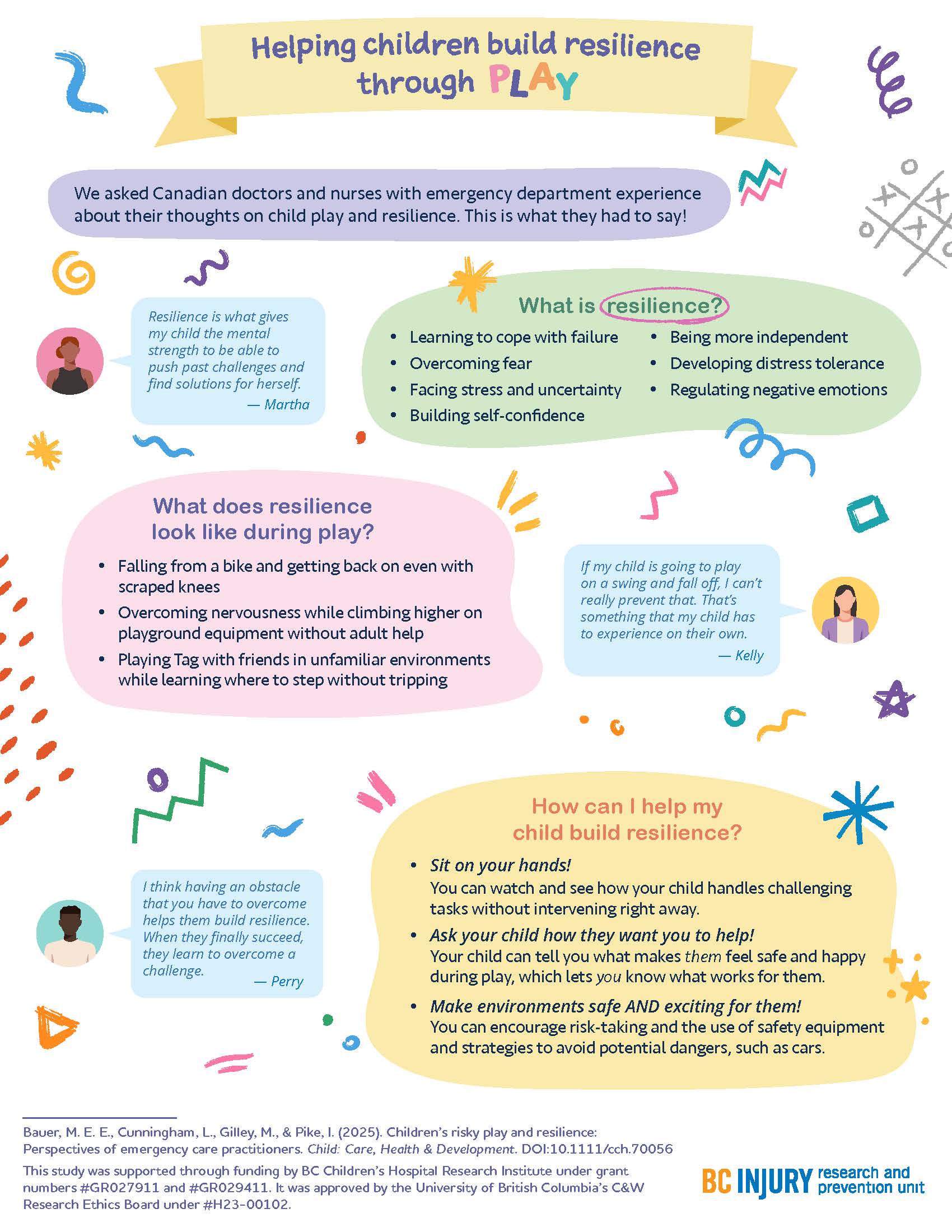
Graphics and posters by Milica Radosavljevic


